

What exactly is consciousness?
Xandra H
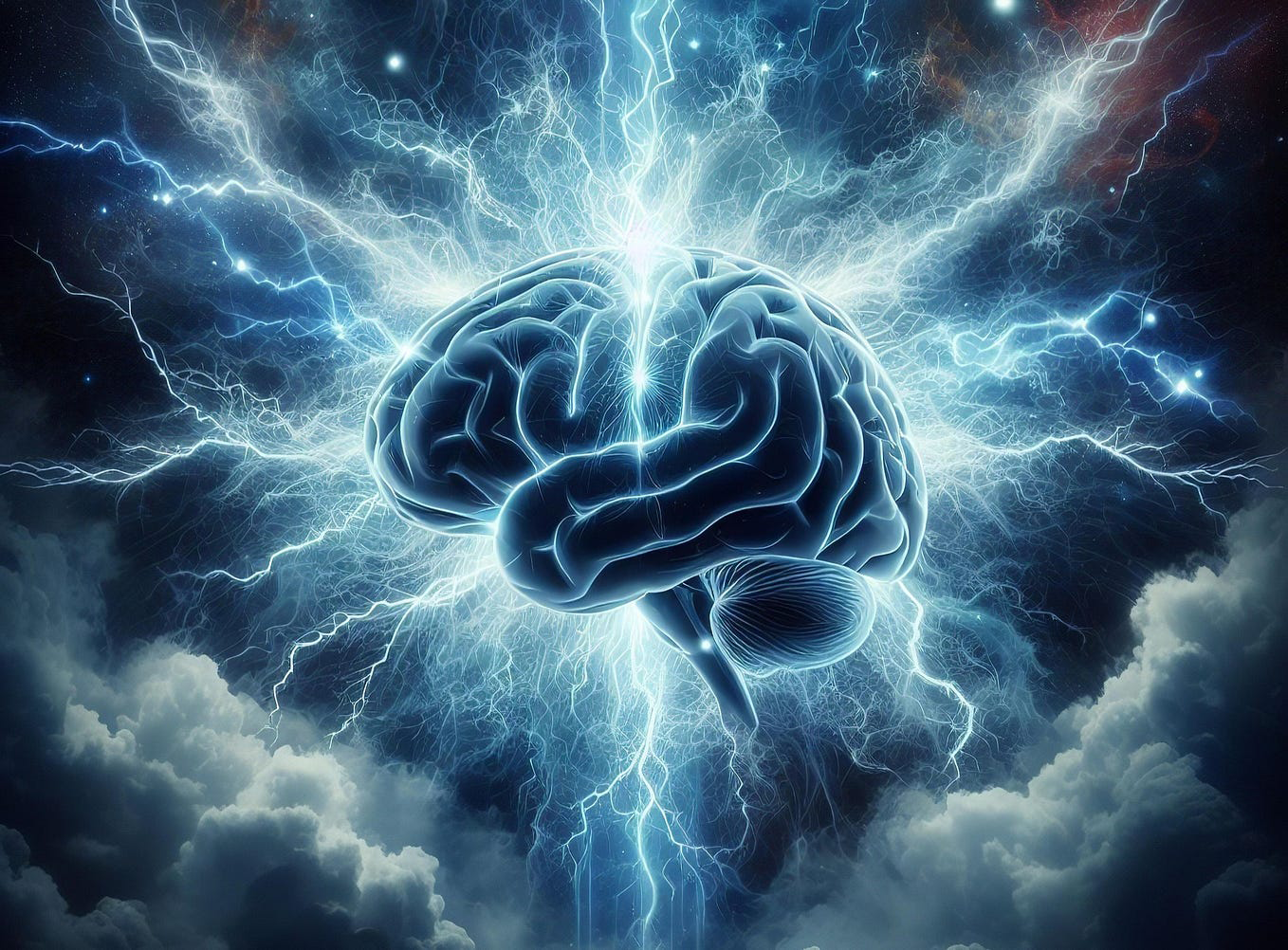
Ever since humans became aware of themselves in relation to the ‘out there’, this has been a fundamental question that has never been satisfactorily explained.
I remember reading Daniel Dennett’s book, Consciousness Explained when I was a student and although it’s a good theory, it didn’t completely convince me that he had the definitive explanation.
Consciousness is one of those concepts that roughly divides into two types of explanation depending on how you see the world. Firstly, if you are of a practical and quantitative nature, then you will appreciate the theoretical perspectives of Denett and his colleagues, who describe consciousness as a byproduct of the biological workings of the brain. If you are of a less practical and more qualitative inclination, then theories that adopt a more unknowing, or even spiritual dimension will resonate more with you.
The other problem is: what sort of consciousness are we talking about? There seem to be two aspects to this phenomenon as well. The first is: being aware, in the sense that the organism is aware of other things outside itself and responds accordingly, but it is not aware that it exists as a unique individual. Most animals are conscious at this level, and some researchers believe that plants have an ‘awareness of place’ somewhat below that level. However, since plants do not have the same sort of physiognomy as animals, it is difficult to imagine, let alone locate, where this might come from. Plants are more interesting than you might think. If some sort of rudimentary consciousness exists in plants, some seem to be able to switch it on and off over time without losing it completely, by becoming dormant; sometimes for many years before springing back to life.
The second aspect is: that I am aware of myself as a unique individual who is conscious of my consciousness. This was seen as solely the preserve of humans, until experiments with higher primates showed that they share at least some of this awareness, which is why you should always treat chimps, gorillas and orangutans with respect!
Many theories of what the essence of consciousness is and how it first evolved have been proposed over the years; but none offers a complete explanation of all the functions attributed to it. Although most of these theories link consciousness to brain activity and seek to explain it in terms of the inter connectivity and speed of neuronal activity, the end result is that it is still a matter of faith.
If we really understood, we would be able to explain it in simple terms and replicate it in non-conscious matter, such as robots or machines.
The gist of what these theories claim is that in evolving more and more complexity, the brain sort of woke up one day and realised it existed and was alive. This idea underpins much of the thinking behind AI. The idea is that things will get faster and more complicated until one day, there will be a singularity, and the tech will ‘wake up’ and realise it is alive. Sort of like a biotech big bang, or a 21 Century Frankenstein’s monster.
But what wakes up? The brain is still constructed of the same material with new bits added on as it evolved. There is nothing supernatural about the latest bits of the developed brain and they consist of the same material substance as the earlier parts of the brain; so, where did conscious awareness come from; and why that and not something else? In other words, what purpose does consciousness serve?
Some theories propose that consciousness allows us to be aware of time and connect the past to the future via the present. In doing this, we can learn to conserve things that help us and avoid repeating past mistakes. Well, anyone who has followed what has been happening in the world over the last 50 or so years would raise an eyebrow at that; as it clearly hasn’t been working!
Some people think it is only a by-product of brain activity and nothing special.
Some people call it ‘the soul’, or the ‘essence of self’ and some people think it is a subset of a larger consciousness and call it ‘being part of God’.
However one thinks of consciousness, it is still a mystery. In seeking to explain consciousness, those on the mechanical side, choose to ignore the bits of consciousness that don’t fit their narrative, such as the quality of colour, individual responses to pain and other forms of subjective experience and perception that form an individual. By reducing it to a brain function, it skips over individual constructs and seeks to define it as just another process. It does not explain satisfactorily how neural activity produces individual subjective experiences. In these theories, when you die, consciousness does not go anywhere; it just stops because there is no functioning brain to produce it.
For those who do not subscribe to these theories, individual consciousness continues on after death and joins with the wider consciousness that is located in whatever the individual believes in.
If something is being produced, then what is it? Does it have any substance of its own? I ask this because we all know the difference between something alive and something dead. If consciousness is the focal point of individual aliveness, then, if its absence is death, what has gone missing?
There were some experiments carried out in the 1960s and early 1970s where the researchers said they had weighed a body before and just after death and found a change in weight. This was attributed to the soul/consciousness leaving the body and the difference was calculated to be a few ounces, from what I can remember. The research was discredited quite quickly as it was shown to be an unprovable assumption and there were plenty of more concrete reasons why a body might lose a few ounces after death. This is one example of how using current scientific methodology to explain an unknown phenomenon can come to grief.
The latest theory of consciousness, proposed by Maria Stromme, errs on the pan-psychic side and tries to tie it in with the anomalies of quantum physics as well as near death experiences and other outlying phenomena in a more unified way. This theory imagines that consciousness is the actual substance and building blocks of the universe and everything comes from it and is created by it including time. Individual consciousness is like waves in the sea. They seem to be a thing in their own but are in fact just ripples of the whole that assume a certain shape for a while and then return to the mass that produced them. I quite like this theory although I have no idea if it is correct or not.
Pan-psychic theories are more helpful in that they tie together all the things more mechanical theories leave out. However, the downside is that they can never be tested, and you will only find out once you return to the whole, if it exists.
Consciousness matters because amongst many other reasons it is so fragile. We can lose it temporarily through anaesthesia, sleep, or other forms of unconsciousness and it can adversely alter our cognitive state through severe mental trauma, or brain injury, preventing us from experiencing our existence as we would have done under less dramatic circumstances. This shows that brain changes do alter consciousness, so I think it is safe to say that conscious awareness at least, takes place in the brain.
Until this latest theory from Maria Stromme, all research into consciousness focused on that aspect alone, yet because it has still not explained how this transition from neural activity to individual experiences takes place, it is now acknowledged that an explanation of this phenomena has to form part of any future theoretical explanation, if the research is not to end up going down a blind alley.
So, what is consciousness? Well, apart from being the thing that distinguishes us from being alive or dead, I am up for considering any reasonable explanation.