

Competence, Confidence and Community:
Is Michaela the answer to the ‘mental health crisis’?
Lucy Beney
There has been a huge focus on the role that schools can play in addressing the so-called ‘mental health crisis’ amongst young people in the UK. Solutions are seen to rest on the provision of Mental Health Support Teams in schools and ensuring that children and young people have access to counsellors and other professionals who can offer support with life’s challenges. In recent years, the wellbeing workforce in education has grown exponentially, but the state of the nation’s children has not improved.
Alongside attention to individuals, whole-school initiatives have been implemented, to ‘raise awareness’ of difficulties and ‘promote better mental health’. While some see great value in this, others are concerned that many of these interventions simply encourage rumination and introspection, and can fuel social contagion, as adolescents are especially susceptible to peer pressure. Certainly, that appears to be the case.
Looking in the wrong direction
What if the focus of policy makers, planners and practitioners has been wrong all along? Is it possible that the answer to the decline in children’s wellbeing and the huge rise in ‘behavioural difficulties’ could be successfully addressed in school, but not through ‘mental health’ measures? It is increasingly obvious to me that a return to prioritising what children and young people actually need, in order to develop a healthy sense of self, and to acquire the skills to ‘do life’ successfully, might obviate the need for ‘mental health’ interventions altogether.
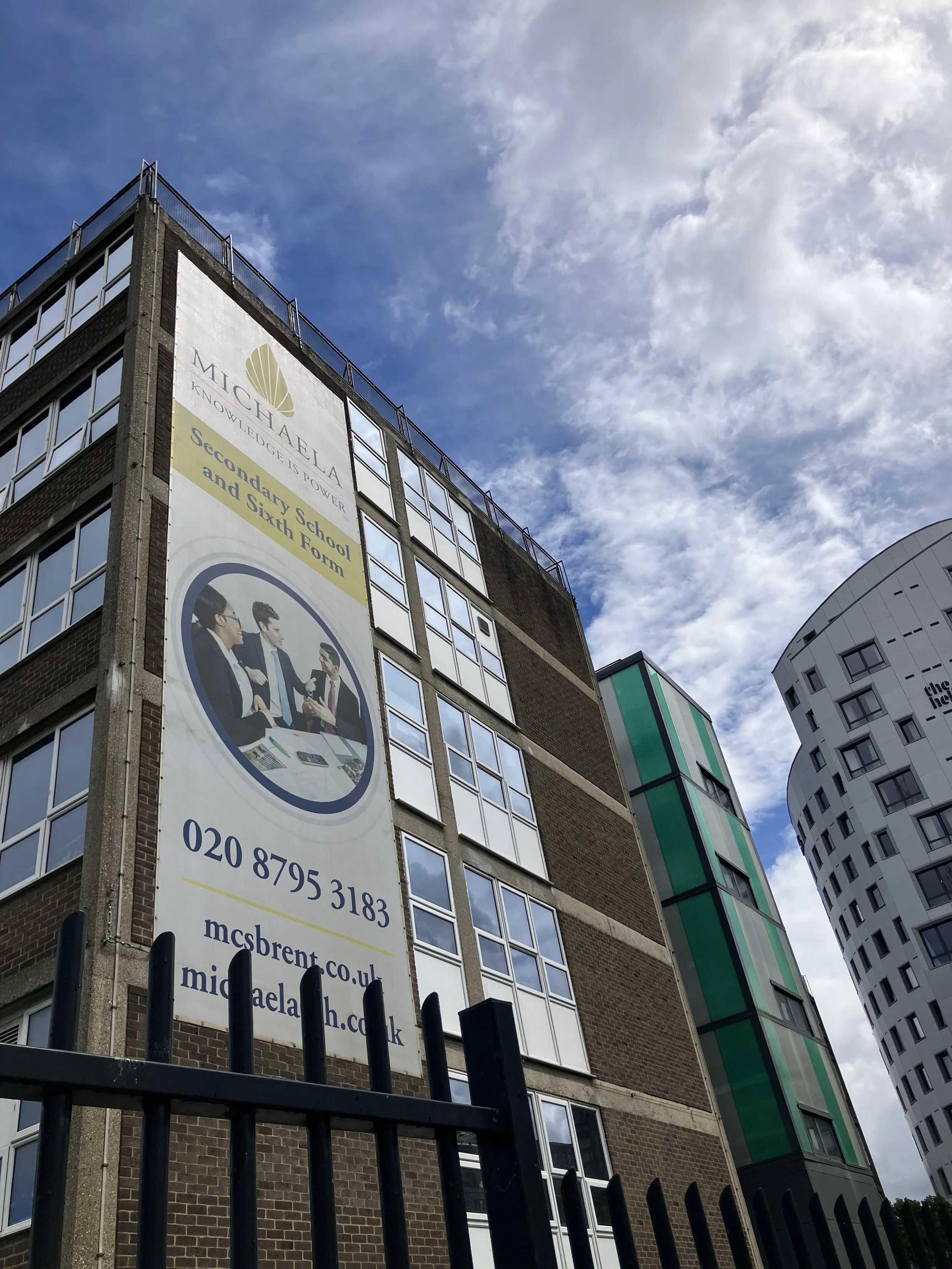
During the summer term, I had the immense privilege and pleasure of spending the day at the Michaela Community School in Wembley, North London. The winding road which led to my invitation to speak to staff there, mirrors exactly how I believe our thinking on matters of child and adolescent mental health needs to evolve.
It was because of my interest in – and attempts to address – the apparent emotional distress of so many children, that I came to the eagle-eyed attention of Michaela’s justifiably (in)famous headmistress, Katharine Birbalsingh. It was then sitting, eating lunch with a group of her pupils in the school dining room, which clarified for me the steps which we now need to take collectively, to reverse the disastrous route down which so many children have so carelessly been sent.
The Michaela Community School nurtures competence, confidence and community, all well-known prerequisites for sound emotional and mental health – and this is how.
Academics and everything else
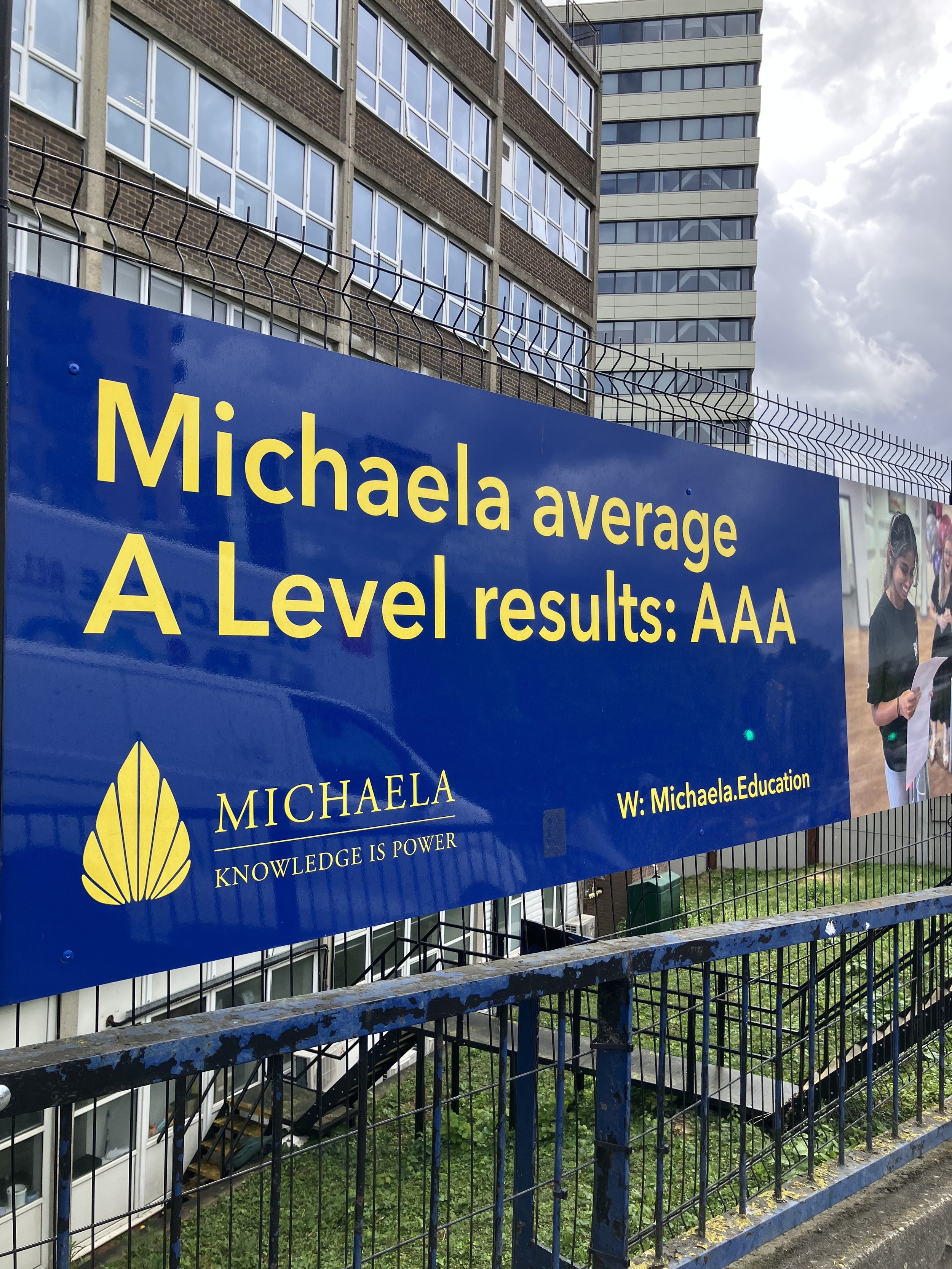
Great attention is quite rightly given to the Michaela Community School’s astonishing public exam results. This year, at A Level, an average grade of AAA was achieved across all subjects, with nearly 70% of all exams graded A* or A. At GCSE, over 50% of grades were 9 (super A* in old language), 82% were graded 7 to 9 and there was a 99% pass rate across all exams, with 98% graded 5 to 9.
All of this is achieved in a non-selective school, funded reluctantly (that’s another story) by the government, and housed (even more reluctantly) by the local authority. The vast majority of pupils are drawn from ethnic minorities, living in impoverished neighbourhoods, with drug-dealing, gangs and many other social problems on the doorstep. Many students speak English as a second – or subsequent – language.
This, however, is not Michaela’s crowning glory. The thoughtful, engaged individuals – both students and teachers – are the jewels in that crown, and underpin that success. It is expected that everyone greets each other politely, that people look out for others and follow the rules. Community and real relationships are highly prized – and feeling a valued part of a vibrant community is very beneficial for mental and emotional health. After all, it is the premise upon which the move towards NHS ‘social prescribing’ is built.
The lady who lunched
There is something supremely civilised about sitting down together, around a table, regularly to share food and conversation. Entire cultures have grown up round this simple, everyday luxury. At Michaela, community centres on ‘family lunch’.
Each pupil is assigned to a table of six in the dining room. Turns are taken to lay the table, serve the food and clear away. There is no menu, no choice, no canteen-style pick-and-mix – there is one dish, which is shared by everyone. It is always vegetarian, to address religious or ethical sensitivities.
There is also Michaela’s own version of ‘thought for the day’ – pupils are given a topic to discuss among themselves, and everyone around the table is expected to contribute, while others listen. Visitors join the students for lunch, and on the day that I visited, we were invited to consider how losing the use of our arms might impact our lives. This came ahead of a visiting inspirational speaker, who has overcome just such a hurdle. Contributions were thoughtful, original and compassionate and all the young people were eagerly looking forward to hearing the speaker talk about his life.
This contrasts starkly with my recent experience of lunchtime in other schools – often a chaotic affair, as some head to the canteen, others to vending machines, while others search for squashed sandwiches. Some students sit socially in groups to eat, while the lonely and the isolated hide their shortcomings, crouching in stairwells, on fire escapes or even in the narrow space behind pinned-back fire doors. There are food fights, carpets strewn with crumbs and a mountain of waste. Seemingly, this is just fine in the modern education industrial complex.
‘Depression’ and ‘anxiety’ are two of the most common ‘diagnoses’ among teenagers currently. Much of this is rooted in isolation and a lack of confidence in social interaction. At a stroke, ‘family lunch’ addresses both of these issues. Nobody is abandoned to eat alone, and nobody needs to feel tongue-tied, desperately searching for something to talk about.
The young people at my table – aged 13 and 14 – were, without exception, articulate and confident, unafraid to voice their ideas and raise important questions. All were unfailingly polite, and well-schooled in the small talk which oils the wheels of social interaction. I had to smile when asked “Have you come far?”, by an earnest young girl, beaming beneath her hijab – an enquiry famously associated with Her Majesty the late Queen, greeting guests at Buckingham Palace garden parties. These kids will go far.
Mastery of subject and self
A great deal of time and effort is currently expended in trying to ‘teach’ young people certain skills and values, without any recognition of the most effective way in which these things are inculcated – through consistent example and regular practice, with people who care.
Confidence and self-esteem, just like resilience, cannot be taught. They are closely related to competence, whether in the social sphere or the academic arena. Competence rests on mastery, of self and subject. The Michaela Community School offers children from all backgrounds the opportunity to do just that, ensuring that their life chances are genuinely transformed.
Michaela’s motto is ‘Knowledge is Power’. So simple and so true, and yet a belief which the educational establishment seems to have abandoned. Young people at Michaela know their stuff and delight in sharing it. This is no surprise. On arrival, a member of staff cheerfully warned me that I would remember everything I learnt in the six lessons which I observed. She was not wrong.
English, French, Art, Maths, RE, Biology – I could still write an account of each class. There is no secret to this. The highly engaged – and engaging – teachers at Michaela have the full attention of the class, all seated in rows and facing forward, and they mix instruction from the front with regular testing and reinforcement of what is being learned. More often than not, it is fun, there are games, mnemonics – but no gimmicks. And not a screen in sight. This is real learning, not the learning-lite offered by vacuous, AI-driven, interactive ‘individual learning plans’.
Approaches to the curriculum ensure that students are stretched and stimulated. To grow, to be educated, means to be challenged and to have perspectives widened. It involves the transmission of a body of knowledge derived from the brightest and best minds down the centuries. It acknowledges the outstanding achievements on which our civilisation has been built and leads to the understanding necessary for the children who are its heirs.
This does not mean overlooking or failing to respect the varied traditions from which these children come. It means providing context and substance to these young people’s lives, in this place at this time, within a fast-changing world. ‘Identity’ here, is real, rooted and multi-faceted, not selected off-the-shelf, and worn to signal virtue or victimhood.
So many young people with whom I have worked are ‘untethered’. They have little sense of belonging. Instilling a sense of history and of the power of the shared culture of the country in which these families live, and in which these children will most likely make their lives, is key both to personal and professional success.
A totally different – and far more constructive – approach to ‘special educational needs’ is taken at Michaela. Rather than seeking ‘diagnosis’, labelling children and then making accommodations, those special needs are actually addressed individually, student by student. Extra support is targeted directly at the issue at hand, with the aim of overcoming those difficulties. The school’s results and the complete absence of behavioural issues in the classroom, and more widely around school, is a glowing testament to the success of that approach.
Almost incredibly, in this age of mass-information, when anything can be answered at the press of a few keys, many children are interested in nothing. They have no aspirations, beyond perhaps being an ‘influencer’, and spend most of their time scrolling on their phones. This is not the case at Michaela. I was given a guided tour by two accomplished young teenagers. Neither spoke English as a first language, and one had only been in the UK for a little over a year, but both chatted confidently about their favourite subjects – French and Maths – and their hopes for the future. It was unbelievably refreshing.
Learning facts and figures, exploring stories and achieving a command of language facilitates communication and engenders curiosity – and curiosity about the world, and about each other, encourages people to look outwards, rather than inwards, to wonder and to learn more. All of this contributes to a rounded and satisfying life, leaving little time for destructive introspection.
When the adults leave the room
Surely, enabling children to grow into healthy, resilient adults, capable of living a useful, well-rounded and satisfying life, while contributing to their community, should be the ultimate aim of any school. On the basis of current evidence, many UK schools are failing this test.
The main reason for this is the complete abdication by adults of their responsibility for raising children. Children cannot raise themselves, neither can they be successfully led into adulthood by their peers. Worse still, ‘adultified’ children, given the wrong sort of responsibility at too young an age, become infantilised adults. Many of these adults will be unable to cope with everyday life and receive a ‘mental health’ diagnosis. Many will rely on their own children for emotional support – and so the cycle starts again.
At Michaela, the adults are in charge. The school has been frequently criticised for its ‘draconian’ discipline, but Katharine Birbalsingh understands only too well the needs of her charges. Children thrive with structure and boundaries, and where what is expected of them is clearly understood. A culture of praise and appreciation balances any constructive criticism. Yes, there is zero tolerance for rule breaking, but the result creates an atmosphere of freedom – freedom to learn, freedom from bullying, freedom from disruption. Children feel safe – and that is priceless, especially in a society rife with discord, disillusionment and disintegrating families.
At the same time, children are encouraged to take responsibility for themselves and their actions. Large posters reading “I am the master of my fate” and “I am the captain of my soul”[1] are displayed in the playground. The sense of agency and accountability which this gives young people is so much healthier than the ‘learned helplessness’ or blame laid on others, which is woven through critical social justice theory. It unites rather than divides.
This is also true of Michaela’s ban on political and ideological messaging within school. The display of symbols signalling allegiance to one set of beliefs or another can be incredibly divisive at best and intimidating at worst. Some critics object to this restriction on freedom of expression among students – but these young people have the rest of their lives in which to express themselves. The solid, united community of which they are currently a part provides the firm foundation upon which they will build that life.
Duty to others and responsibility for self underlie Michaela’s ethos. When serving others and personal agency are known to improve wellbeing, it is hard to see why schools across the land are not rushing to follow suit. My suspicion is that in the current ideologically infused climate, producing ‘the right sort of people’ is prized over nurturing thoughtful, capable individuals. After all, competent people who serve one another and can take responsibility for themselves and their lives are, on balance, happier and crucially, more independent and pro-active.
The way forward
If schools focused on competence, confidence and community – and followed the example of the Michaela Community School, I have no doubt that not just the educational attainment, but the life chances of children would be transformed. After all, as Katharine Birbalsingh has said, the school is not just educating the professionals and workforce of the future, but nurturing the next generation of husbands and wives, mothers and fathers. Every member of staff in the school cares deeply about the social bonds which make life worthwhile.
If we want to address the mental health crisis, the future of education should look like Michaela. The school has banished, once and for all, the “soft bigotry of low expectations”[2] and instead is a beacon, showing us all what can be achieved when we actually put the needs of children first.
I could have written an entire book about my visit to Michaela Community School, and what I learned from staff and students. Thankfully, there is already a book available called Michaela - The Power of Culture, which is edited by Katharine Birbalsingh. It is available here from Amazon and is stocked by other good book stores.
To witness the excitement around the arrival of this year’s A Level results at Michaela, please click here, and for this year’s GCSE results, please click here. You will not regret it!
Katharine Birbalsingh now hosts her own excellent podcast, Strictly Education, launched in August 2026. Episodes can be viewed here.
My paper for the Family Education Trust, Suffer the Children: Why having a ‘mental health professional’ in every school is not the answer can be read here.
[1] The final two lines of the poem Invictus, by William Ernest Henley, 1875.
[2] Michael Gerson, from a speech written for George W Bush, September 1999.

Lucy Beney, Save Mental Health’s Correspondent on Child Mental Health.
Lucy, of Thoughtful Therapists is an Integrative Counsellor working in private practice and also a facilitator for the Tuning into Teens parenting programme